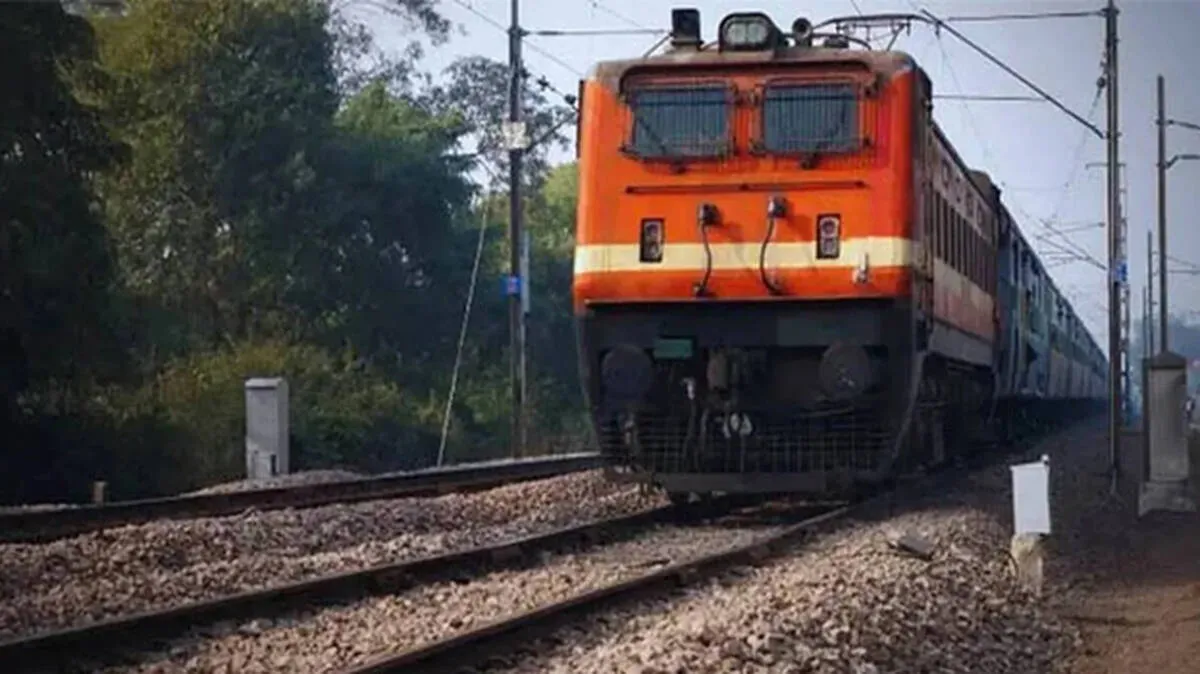
KOCHI: Indian Railways is transitioning away from diesel-powered locomotives, with electric traction now making up the majority of its network. Alternatives to diesel, such as battery-operated, liquefied natural gas (LNG), and hydrogen-powered locomotives, are being developed or introduced.
Currently, Indian Railways operates approximately 2,500 diesel locomotives, which are expected to be phased out by 2030. Of its total network of 70,117 route kilometres, only 405 kilometres remain to be electrified. Battery-powered locomotives are under development for use on non-electrified sections and for shunting operations in railway yards. The first such locomotive is being constructed at an Eastern Railway workshop in West Bengal.
LNG-powered locomotives employ a dual-fuel system that allows them to run on both diesel and natural gas, potentially reducing diesel consumption by 40 percent. The first train utilising this system began operating from Sabarmati recently. This locomotive can carry 2,200 litres of diesel and 850–900 kg of LNG, with an impressive range of 1,600 kilometres on a single refuelling.
In July, India inaugurated its first hydrogen-powered train on the Sonipat route. This train's propulsion system has a capacity of 1,200 kilowatts, and more hydrogen-powered trains are expected to be introduced by 2030. Additionally, Indian Railways is developing a hydrogen locomotive propulsion system for NTPC, which will have a capacity of 2,400 kilowatts, making it the world's most powerful hydrogen locomotive propulsion system.
One of the key objectives of phasing out diesel locomotives is to reduce carbon emissions. This shift is also expected to lower crude oil imports and generate foreign exchange savings. Indian Railways consumed 2.93 billion litres of diesel in the 2015–16 fiscal year, which has decreased to 1.08 billion litres in 2024–25. Despite this reduction, the annual diesel expenditure for the railway network remains above Rs 10,000 crore, according to the source report.












 HOME
HOME LATEST
 NOTIFIED NEWS
 POLL
POLL KERALA
  EDITORIAL
  INDIA
INDIA  WORLD
WORLD  BUSINESS
  CINEMA
  SPORTS
  LIFESTYLE
  SPECIAL
  SCIENCE & TECHNOLOGY
 |
|