NEW DELHI: The Delhi government has approved a comprehensive electric vehicle (EV) policy backed by a ₹15,000-crore financial outlay, aiming to drastically curb the capital's worsening air pollution by forcing a transition to clean energy across high-emission vehicular segments.
Delhi Chief Minister Rekha Gupta announced that the new policy will officially take effect on July 1, 2026, and remain operational until March 31, 2030. The allocated funds will be deployed over the next four years to subsidise EV adoption and develop the necessary charging infrastructure across the city.
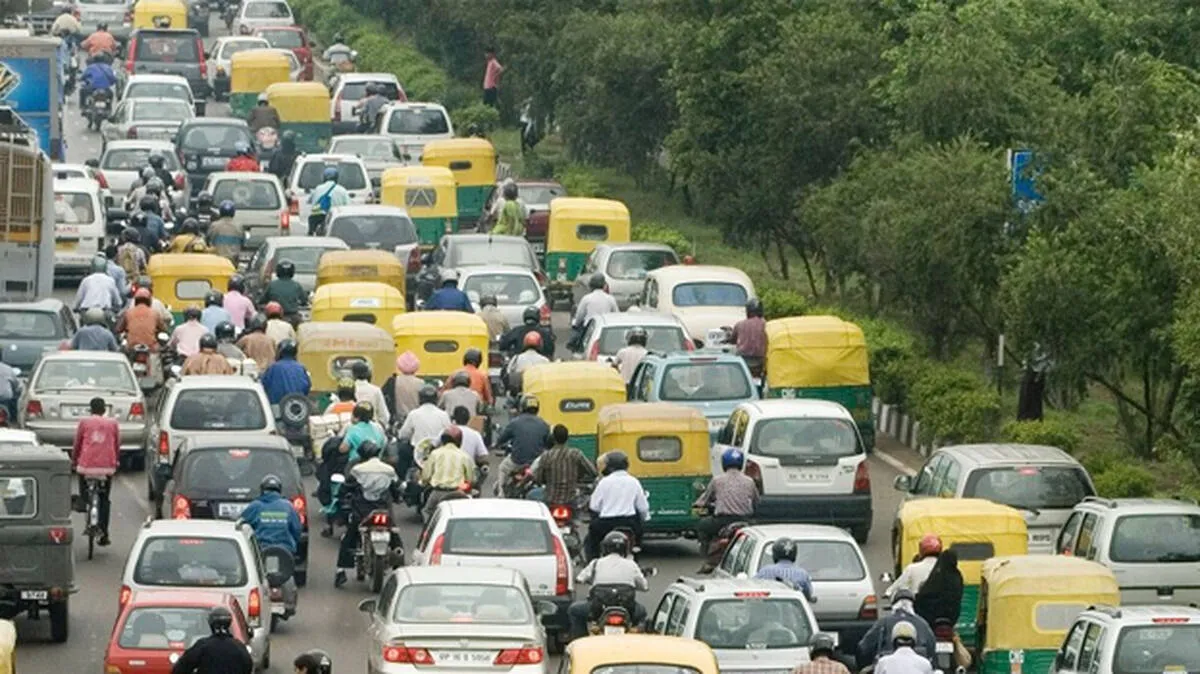
Data from the state transport department highlights the urgency of the intervention, revealing that commercial freight vehicles generate 33% of the city’s vehicular pollution, while two-wheelers and three-wheelers contribute a combined 46% of total emissions.
To address this, the policy enforces strict cut-off dates for conventional internal combustion engines. From January 1, 2027, all newly registered three-wheelers—including auto-rickshaws—and N1 category commercial trucks must be fully electric. Two-wheelers have been granted a slightly longer window, with a complete ban on fossil-fuel registrations coming into force on April 1, 2028.
To support consumers and commercial operators during this transition, the government has introduced a sliding scale of purchase incentives for the first three years.
Buyers of electric two-wheelers will receive a subsidy of ₹30,000 in the first year, which scales down to ₹20,000 in the second year, and ₹10,000 in the third year. For three-wheelers, the financial assistance is fixed at ₹50,000, ₹40,000, and ₹30,000 across the same three-year period. Furthermore, operators purchasing N1 commercial trucks will be eligible for a one-time subsidy of ₹1 lakh during the policy's inaugural year.
Once the respective deadlines pass, regional transport offices will permanently cease the registration of any new petrol or diesel vehicles within these specific categories.










 HOME
HOME LATEST
 NOTIFIED NEWS
 POLL
POLL KERALA
  EDITORIAL
  INDIA
INDIA  WORLD
WORLD  CINEMA
  SPORTS
  LIFESTYLE
  SPECIAL
  SCIENCE & TECHNOLOGY
 |
|