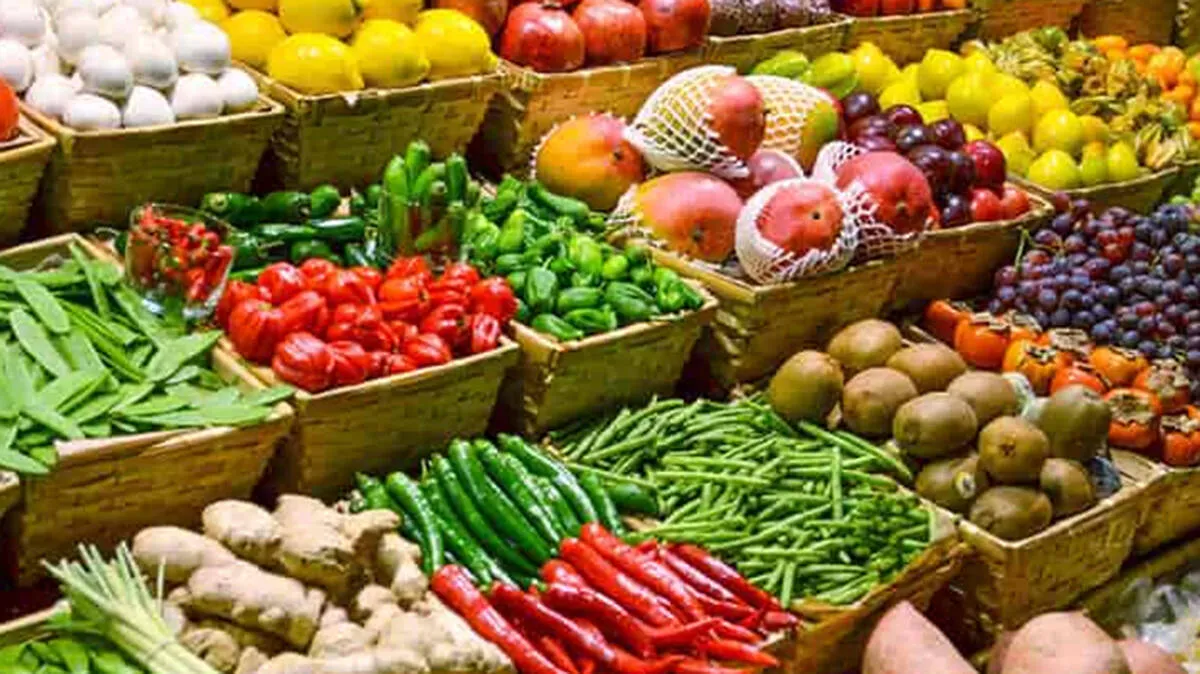
KOZHIKODE: The morning rush at the local vegetable market is a sensory overload of vibrant hues. There are the brilliant oranges of freshly pulled carrots, the deep purples of plump beetroots, and the refreshing aroma of crisp coriander leaves piled high on wooden carts. For the average consumer, this colourful bounty represents health and nutrition. Yet behind this picturesque facade lies an unsettling reality. The very food meant to nourish the body is increasingly laced with a cocktail of hazardous chemicals, transforming the daily meal into a silent health crisis.
What is unfolding across Kerala is a classic case of regulatory inertia. While the usage of dangerous chemicals escalates, the official machinery designed to protect public health has largely turned a blind eye, reducing mandatory food safety inspections to a mere bureaucratic ritual. The bulk of the state’s produce arrives via interstate trade routes from Tamil Nadu and Karnataka, carrying along with it high concentrations of notorious pesticides like Monocrotophos and Cypermethrin—compounds heavily linked to severe health risks, including cancer. While food safety officials do routinely gather samples from various hubs and dispatch them to the specialised laboratories at the Vellayani Agricultural College, the systemic response ends there. Reports are dutifully published every three months, but subsequent punitive actions or policy corrections remain entirely absent.
The consequences of this administrative complacency are starkly visible in the data. In a recent sweeping inspection across nine major markets, four out of every nine carrot samples tested revealed alarmingly high pesticide levels. Finding a bundle of coriander leaves free from chemical toxicity has become virtually impossible. The contamination is no longer restricted to notoriously pest-prone crops; even resilient produce like garlic and gooseberries are now routinely subjected to heavy chemical spraying. This pervasive crisis highlights the quiet collapse of the previous government’s ambitious 'Safe to Eat' initiative, which sought to promote toxic-free fruit and vegetable cultivation. Local farmers point to an agonising dilemma: in the current agricultural landscape, omitting chemical interventions altogether guarantees devastating crop failures and dismal yields. Even the premium 'organic' label has lost its sanctity, with market insiders acknowledging that a significant portion of what is sold as organic is merely a lucrative deception.
A closer look at the laboratory findings reveals the staggering scale of the infiltration. Under standard safety protocols, the maximum permissible limit for pesticide residue stands at a miniscule 0.01 parts per million (PPM)—roughly equivalent to one milliliter or gram of chemical per litre of water. However, the ground reality completely shatters these safety thresholds. Recent random samplings from the bustling markets of Kottayam, Kozhikode, and Thrissur revealed that everyday staples like beetroot, beans, lemons, and apples carried an astonishing 2.59 percent pesticide residue.
The crisis is equally distributed across the geography of the state. In the districts of Palakkad, Pathanamthitta, and Kasaragod, the chemical residue in tested samples hovered stubbornly at 2.20 percent, with beetroots and local bajji chillies emerging as the highest carriers of the toxic load. Perhaps most alarming for the traditional Indian kitchen is that this chemical invasion has breached the spice rack. Essential pantry items that form the bedrock of daily cooking—including fennel, cumin, dried red chillies, and coriander—have tested positive for unsafe levels of contamination, proving that dry groceries are no safer than the fresh produce section.
With institutional safeguards failing to stem the tide, the responsibility of detoxification has shifted entirely to the consumer. While it is impossible to completely undo the effects of commercial farming practices, culinary experts and food safety researchers suggest a rigorous preprocessing regimen in the kitchen to significantly mitigate the danger. Before any vegetable or fruit undergoes chopping or cooking, it should ideally be submerged in water treated with vinegar or baking soda. Traditional alternatives, such as soaking the produce in a solution of dense tamarind water or turmeric powder, have also proven highly effective in breaking down surface chemical bonds.
For maximum efficacy, vegetables that allow for it should be cut into pieces before soaking, ensuring the cleansing solution reaches hidden folds. Leaving the produce immersed for at least half an hour, followed by two to three rounds of thorough rinsing under clean, running water, can successfully strip away the vast majority of surface-level toxins. The vigilance cannot stop at fresh produce; dry staples require their own protocol. Whole spices, rice, and wheat should be thoroughly washed and completely sun-dried before they are sent for milling or ground into powders. In an era where the system fails to guarantee the safety of the plate, the home kitchen must transform into the final line of defence.













 HOME
HOME LATEST
 NOTIFIED NEWS
 POLL
POLL KERALA
  EDITORIAL
  INDIA
INDIA  WORLD
WORLD  CINEMA
  SPORTS
  LIFESTYLE
  SPECIAL
  SCIENCE & TECHNOLOGY
 |
|