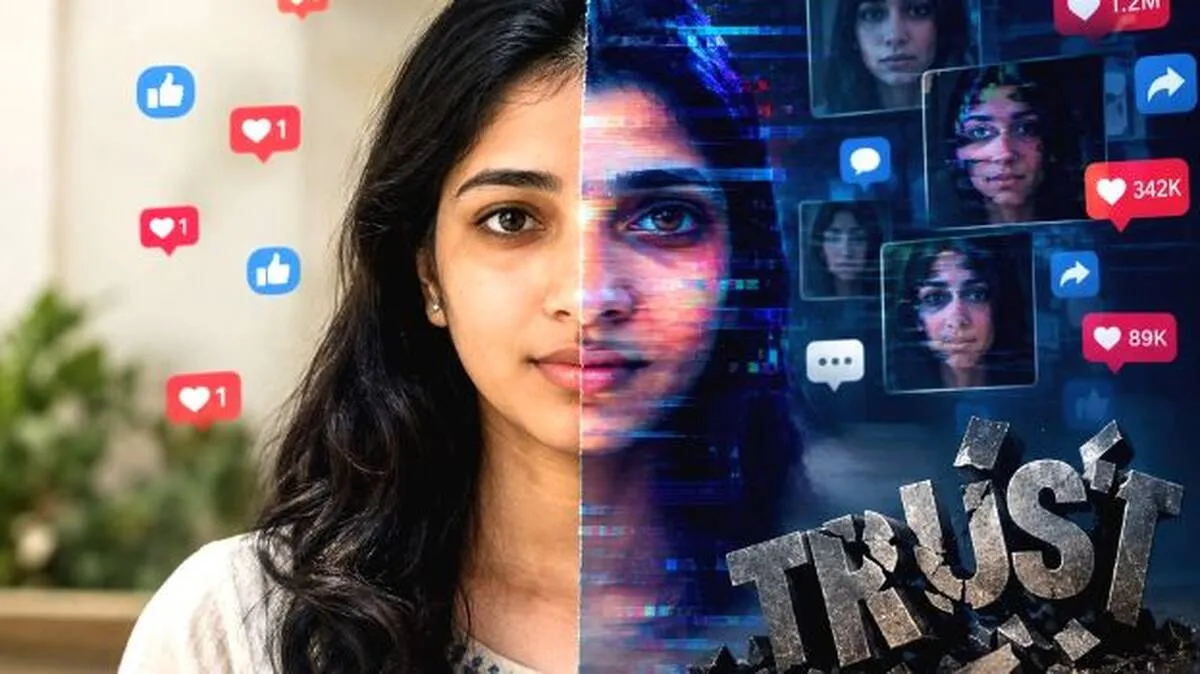
KOCHI: Could simply posting a photo on Facebook or Instagram land you in trouble? Can people who do not even use social media be targeted by taking their photographs and digitally altering them? Following the Thrikkakara morphing case and similar incidents, morphing and deepfakes are increasingly becoming a nightmare for many.
Kerala Kaumudi had reported yesterday about women and girls living in fear of morphing. However, information from the state police system suggests that there is currently no complete solution to the growing threat.
Cybercrime networks operating in cyberspace have grown beyond the control of the state. These networks, which target people through character assassination and blackmail, have international links. This makes it necessary for the Central Government to step in and take action. Central investigative agencies must be deployed to dismantle these deeply rooted networks.
Foreign servers, encrypted apps and cryptocurrency-based transactions are among the major strengths of these networks. The Union Ministry of Electronics and Information Technology, along with investigative agencies such as the CBI, can take steps to dismantle these global networks and curb the use of fake apps. Although the strengthening of the IT law through amendments has provided some relief, such crimes have not declined.
Telegram has become a major hub for such networks. Taking advantage of end-to-end encryption and the limited disclosure of information about active members, groups running obscene bots and profiles have flourished. Another challenge is Telegram's approach to groups that operate only through links. Even when such groups are identified and complaints are filed, action is not always taken quickly.
“The Central Government must step in to prevent the circulation and sale of morphing and deepfake videos. Only then can a permanent solution to the problem be found.”
-Nandakishore Harikumar,
Cybersecurity expert













 HOME
HOME LATEST
 NOTIFIED NEWS
 POLL
POLL KERALA
  EDITORIAL
  INDIA
INDIA  WORLD
WORLD  CINEMA
  SPORTS
  LIFESTYLE
  SPECIAL
  SCIENCE & TECHNOLOGY
 |
|