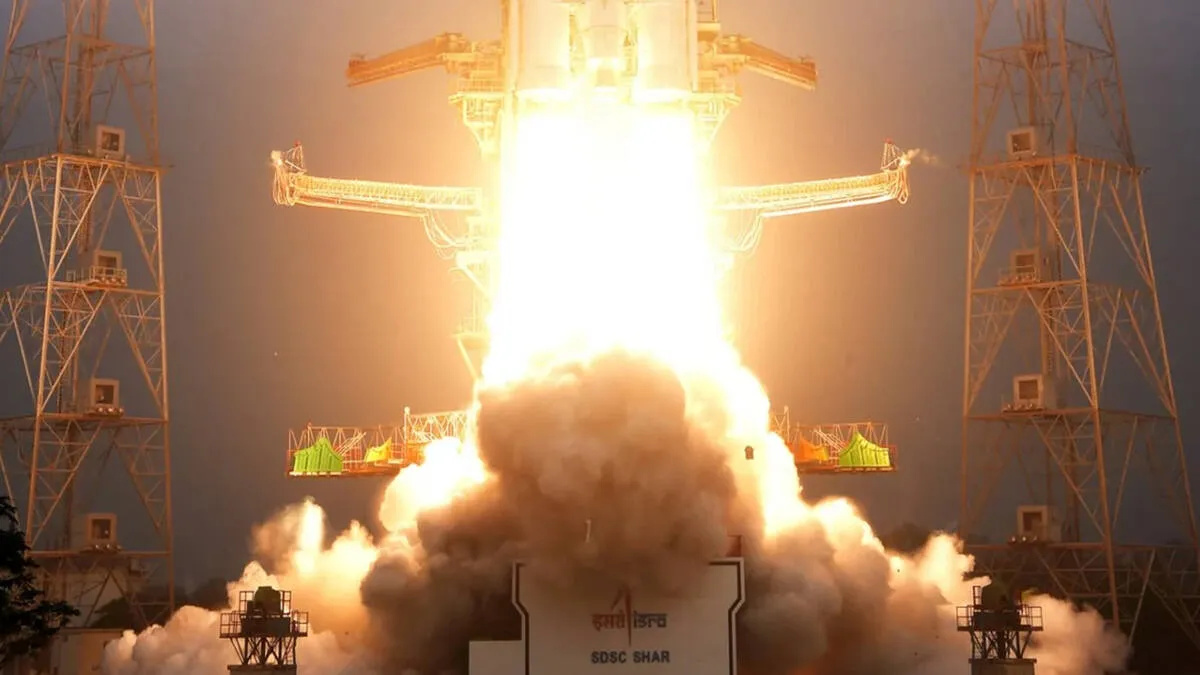
CHENNAI: In a major boost to India's deep-space ambitions, the Indian Space Research Organisation (ISRO) has successfully conducted a critical power head test of its indigenous semi-cryogenic rocket engine. Marking a vital milestone in the country's space exploration timeline, the engine met its objectives by operating at 88 percent of its targeted power capacity.
The hot test was executed on June 24 at the high-tech ISRO Propulsion Complex (IPRC) located in Mahendragiri, Tamil Nadu. According to an official statement released by the space agency, the engine’s power head demonstrated exceptional stability and safety while maintaining a massive 175-tonne thrust level throughout the operation.
This success builds upon a series of systematically scaled trials, following earlier development phases where the system was tested at 47 percent and 60 percent capacities. Engineers note that the flawless performance at 175 tonnes of thrust injects tremendous confidence into the team as they prepare for the upcoming full-scale testing at a peak capacity of 200 tonnes.
The newly developed semi-cryogenic system is slated to replace the existing liquid-fueled L110 core stage of the LVM3 (Launch Vehicle Mark-3), India’s heaviest and most powerful operational rocket.
At the heart of this upgrade is the high-performance SE2000 engine, which boasts a 2,000-kilonewton capacity. By shifting to a cleaner, more efficient propellant combination of liquid oxygen and rocket-grade kerosene, the upgrade is expected to dramatically increase the payload capacity of India's heavy lifters while streamlining launch costs and enhancing overall mission efficiency














 HOME
HOME LATEST
 NOTIFIED NEWS
 POLL
POLL KERALA
  EDITORIAL
  INDIA
INDIA  WORLD
WORLD  CINEMA
  SPORTS
  LIFESTYLE
  SPECIAL
  SCIENCE & TECHNOLOGY
 |
|