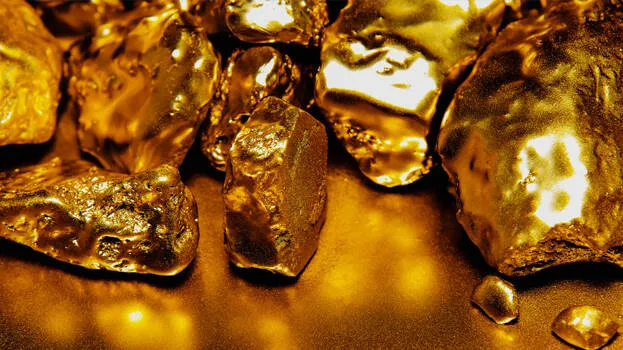
Gold is one of the most vital metals in the world, with many nations relying on gold mining to bolster their economies. Recently, groundbreaking research has revealed that deep-sea volcanoes located northeast of New Zealand, specifically near the Kermadec archipelago, act as natural "gold factories." This discovery stems from a study led by Christian Timm of the GEOMAR Helmholtz Centre for Ocean Research in Germany.
How these "factories" work
The formation of gold in these underwater volcanoes is driven by subduction zones—regions where one tectonic plate slides beneath another. As the plate descends, it carries seawater deep into the Earth’s interior. Under extreme heat and pressure, this water triggers a process known as hydrous melting (sometimes referred to as flux melting).
The Earth's interior rocks contain sulfide minerals, which act as a host for gold. The intense heat and the presence of water in the subduction zone melt these sulfides, releasing the trapped gold into the surrounding molten magma. As this melting process repeats over time, the gold concentration within the magma significantly increases.
Key evidence
Researchers reached these conclusions after examining 66 volcanic samples collected from the Kermadec region. These samples revealed gold concentrations many times higher than those found in lava at standard sea levels.
When this lava erupts and meets the cold seawater, it cools almost instantaneously to form volcanic glass. Because this glass cools so quickly, it "locks in" the original chemical composition of the magma, allowing scientists to accurately measure the presence of:
The study notably found that the ratio of gold to copper in these samples is significantly higher than in typical volcanic rocks.
Reality of mining
While the discovery is scientifically fascinating, experts warn that mining these "gold factories" remains a dream for the future. Several major obstacles exist:
For now, these volcanoes remain protected underwater treasure chests, teaching us more about how the Earth moves its most precious resources from the mantle to the crust.











 HOME
HOME LATEST
 NOTIFIED NEWS
 POLL
POLL KERALA
  EDITORIAL
  INDIA
INDIA  WORLD
WORLD  CINEMA
  SPORTS
  LIFESTYLE
  SPECIAL
  SCIENCE & TECHNOLOGY
 |
|