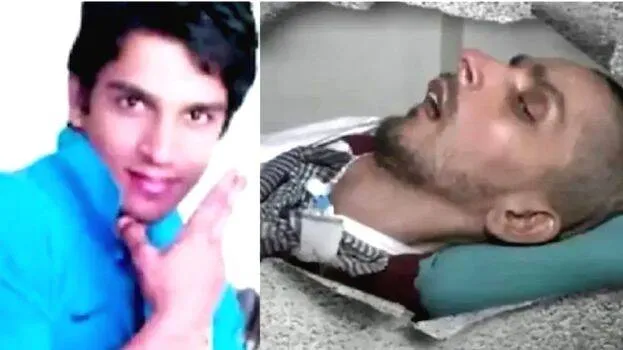
A line in the recent Supreme Court of India order permitting the country’s first euthanasia case not only reveals the deep emotional weight behind the decision to separate life from the human body, but also reflects deeper thoughts about a painless and dignified death, the meaning of life, and the compassion of the judiciary.
“This decision may seem like surrender. In fact, we believe it is an act of profound compassion and courage,” said the bench comprising Justice J. B. Pardiwala and Justice K. V. Viswanathan in its order. The line feels less like a legal statement and more like the closing words of a powerful story, because at its core lies the idea of dignity in life!
The order granted passive euthanasia to 32-year-old Harish Rana from Ghaziabad. About 13 years ago, when he was a 19-year-old engineering student, Rana fell from the fourth floor of a building and suffered severe brain injuries. Since then, he had remained unconscious and motionless in bed. For years, he showed almost no signs of awareness. Occasionally, there would be slight movement in his eyes. He lay there almost like a lifeless body, unable even to recognise hunger. For all these years, his parents and siblings stood by his side, caring for him as he endured endless suffering. In the end, holding on to their son with love, his father approached the Supreme Court of India seeking permission for euthanasia out of compassion. The court accepted the plea.
While considering the petition, the court made an important interpretation of Article 21 of the Constitution of India. Article 21 guarantees the right to live with dignity, and the court stated that this also includes the right to die with dignity in certain circumstances. According to the ruling, when medical science confirms that a patient will never recover and consciousness will never return, the person has the right to a dignified and painless death. In such cases, euthanasia is not about killing a person but about releasing them from endless suffering. In India, only passive euthanasia of removing life-support systems is legally permitted. Active euthanasia, where a patient’s life is ended by administering a lethal drug or injection, is still not allowed in the country.
When the Supreme Court legalised passive euthanasia in 2018, it triggered major debates and disagreements. Some groups argued that humans have no right to take away a life given by God. However, real-life situations often raise difficult questions. How long should a person continue to live in a body that only experiences pain? What happens when the loved ones who have cared for that person for decades are no longer there? These are questions that faith alone cannot always answer. Anyone who knows the long years of suffering faced by Harish Rana would hardly ask why he was allowed to die peacefully. At the same time, courts must examine each euthanasia request carefully. There are no fixed precedents, and every case must be considered individually to ensure that the law is not misused.









 HOME
HOME LATEST
 NOTIFIED NEWS
 POLL
POLL KERALA
  EDITORIAL
  INDIA
INDIA  WORLD
WORLD  CINEMA
  SPORTS
  LIFESTYLE
  SPECIAL
  SCIENCE & TECHNOLOGY
 |
|