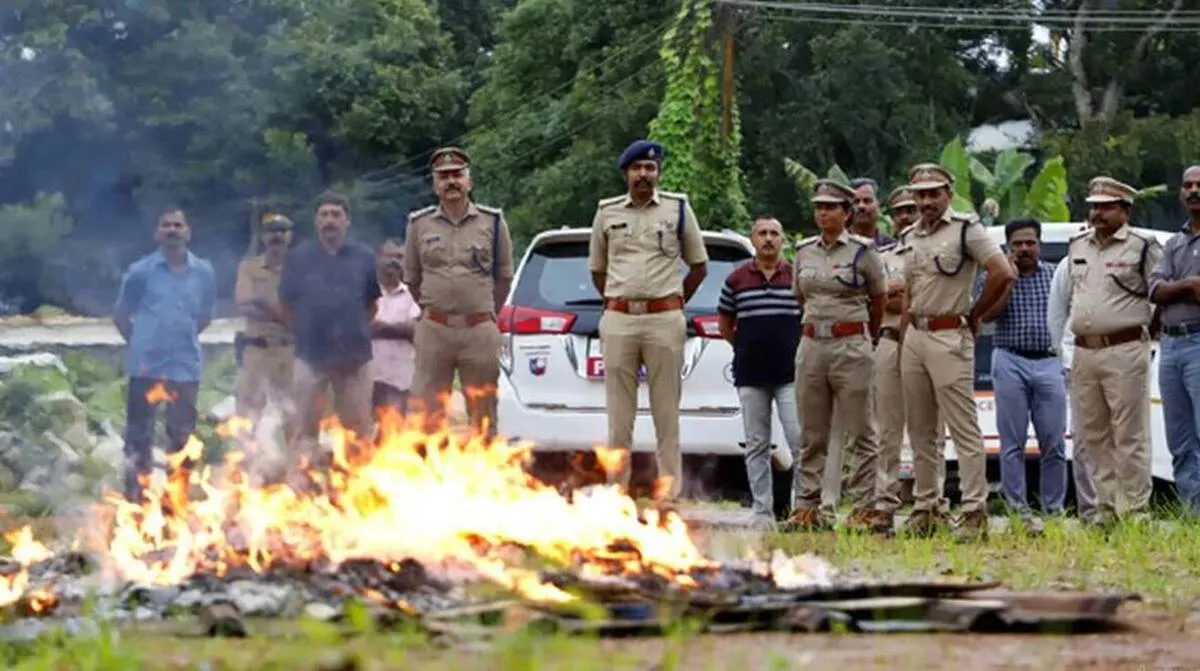
Drug abuse is a cancer for society. To destroy a nation, make youngsters fall into addiction to drugs. It would have far more lethal consequences than any war. Substance abuse—particularly involving synthetic drugs—not only destroys the individual by stripping them of their sense of purpose but also inflicts severe psychological trauma on their family and society. While a large number of people in society consume alcohol, only a very small fraction become addicted to it; the situation with synthetic drugs, however, is entirely different. The most devastating aspect is that virtually everyone who begins using them becomes addicted.
Since these illicit activities thrive with great secrecy, curbing them overnight is impossible. It was against a backdrop where such drug mafias were thriving with various forms of support from bureaucratic and political circles that the 'Toofan' (Storm) was launched under the leadership of the UDF government and the direct supervision of Home Minister Ramesh Chennithala.
As this police operation crosses the 100-day mark, startling findings have emerged. 'Operation Toofan' has achieved the most significant success in Kerala's history in the fight against the drug mafia. Over the past 100 days, 10,036 cases have been registered, and the police have apprehended approximately 11,000 individuals in connection with drug trafficking. Narcotics worth between ₹25 crore and ₹30 crore—including large quantities of MDMA—have been seized from various parts of the state.
Synthetic drugs largely enter Kerala from other states and countries. The wholesalers involved do not operate openly, making it impossible to simply track them; however, the trade grinds to a halt when small-scale dealers are apprehended. By cutting off the supply of synthetic drugs, 'Operation Toofan' created an opportunity for addicts to break free from their dependency through treatment and other means—and this stands as the operation's greatest success. Consequently, those who criticise the initiative by pointing out that most of those arrested are merely small-time agents or addicts are fault-finding machines contributing nothing to the initiative rather than taking pride in being a cynic. It is a widely acknowledged fact that, since the launch of 'Toofan', the volume of MDMA trafficking in Kerala has dropped to a mere fraction of what it used to be.
Drawing on the experience of the initial hundred days, the Home Department is now launching the second phase of the initiative—titled 'Janakeeya Toofan' (People's Storm)—with renewed vigour. The plan involves expanding inspections by coordinating the efforts of local self-government bodies, residents' associations, and the Kudumbashree network. It is also highly commendable that the government has pledged to ensure robust de-addiction facilities to help rehabilitate those struggling with substance abuse. Adulteration in food products poses another major threat, comparable to the menace of drugs; while drug abuse causes visible, direct harm to individuals, food adulteration indirectly afflicts society as a whole with illness. The public expects the government to wage a strong battle against this issue as well.











 HOME
 LATEST
 NOTIFIED NEWS
 POLL
 KERALA
 EDITORIAL
 INDIA
 WORLD
 BUSINESS
 CINEMA
 SPORTS
 LIFESTYLE
 SPECIAL
 SCIENCE & TECHNOLOGY

 |